
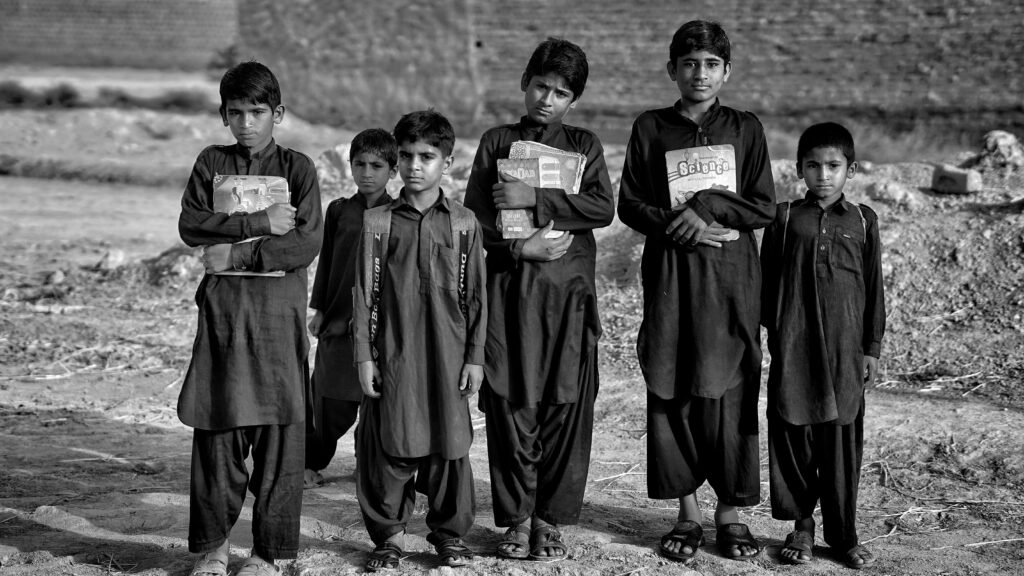
Literacy paradox: Explaining why India’s literacy rate is still lagging behind in 2026
In the context of the 21st century, India is a land of astonishing contradictions.
On the one hand, the country is a global information technology center, a leader in space exploration, and the world’s fastest-growing major economy.
On the other hand, it is also one of the countries with the highest illiterate population on earth.
By early 2026, the country’s average literacy rate will reach around 77.7-80.9% (according to recent projections by NSO and NIPUN Bharat), but “low” literacy remains a major bottleneck.
But “low” is a relative term—it is low compared to the 99% rates of developed nations and low compared to India’s own soaring aspirations.
Why, despite decades of government schemes and billions in investment, does the literacy needle move so slowly?
This in-depth study examines the organizational, social and economic pillars that are holding back education in India.
1.The Shadow of “Learning Poverty”
Before discussing why people aren’t literate, we must define what literacy means in the modern Indian context.
For decades, “literacy” simply meant the ability to sign one’s name or read a basic sentence.
But the 2026 data shows a more ominous trend: learning poverty.
According to a recent report by the World Bank and ASER, nearly 56% of 10-year-old Indian children are unable to read and understand basic age-appropriate texts.
Because they are enrolled in school, they are “literate” on paper, but functionally they lack basic skills.
The trap of memorization learning
The Indian education system has always prioritized memorization over understanding. Students often “pass” primary school without being able to decode phonics or perform basic calculations.
By the time these children reach high school, the curriculum becomes too difficult, leading to widespread frustration and possible school dropout.
2. Economic pillars: poverty and child labor
In India’s many rural and urban slums, children are often treated as “extra hands” rather than students.
Opportunity cost of education
For families living below the poverty line, the “opportunity cost” of sending their children to school is high.
A day spent in class is a day not spent earning 200 to 300 rupees in the fields, at the teahouse, or helping around the house.
The Right to Education (RTE) Act guarantees free schooling, but hidden costs (uniforms, stationery, lost wages) make education an expensive luxury for marginalized groups.
3.
The infrastructure deficit
Although the government has succeeded in building schools within walking distance of most homes, the quality of this infrastructure remains fragmented.
The Single Teacher Crisis: In 2026, more than one lakh schools in India are still run by a single teacher.
Imagine someone trying to teach five different classes simultaneously in one room.
The result is an inevitable lack of attention and poor learning outcomes.
Hygiene and safety.
The main reason for the low literacy rate among women is the lack of functional toilets in schools.
Adolescent girls often drop out of school during adolescence due to a lack of private hygiene services and menstrual products.
4.
Sociocultural barriers: gender and caste
The fight for literacy in India is not just economic; they are deeply social.
gender gap
While the male literacy rate is approximately 84.7%, the female literacy rate lags behind at approximately 70.3%.
In many patriarchal countries, a son’s education is considered an investment (because he supports his parents), but a daughter’s education is considered a liability (because she leaves home after marriage).
This “meta preference for filial piety” is a major hindrance to the national average.
caste and alienation
Historical systematic exclusion of Scheduled Castes (SCs), Scheduled Tribes (STs) and other marginalized groups continues to plague the present.
Discrimination in classrooms, where lower-caste students are sometimes forced to sit at the back or are discouraged by biased teachers, leads to higher dropout rates within these communities.
5.
The digital divide: a new realm of inequality
In 2026, literacy will no longer be limited to pen and paper.
Let’s talk about “digital culture”.
The COVID-19 pandemic has accelerated the shift to online learning, leaving millions of people behind.
While students in urban areas migrated to Zoom and EdTech apps, only 24% of rural households had internet access during the transition.
This created a “lost generation” of students in rural India, whose literacy rates actually declined while schools were closed – a gap the system is still struggling to close.
6.
Language complexity and “educational tools”
India is a linguistically diverse country with hundreds of dialects.
However, the language of instruction in most schools is the official language or English.
Home language or school language. Many tribal and rural children are brought up in a local dialect that is very different from the “standard” language taught in school textbooks.
Enrolling in a school is like enrolling in a foreign country.
Without transitional language programs, these children struggle to learn the basics of reading and writing, resulting in early academic achievement.
7.
The Teacher Quality and Accountability Gap
Teaching in India is often seen as a “fallback” profession rather than a primary choice for top talent.
Instructional Disadvantages: Many public school teachers face non-instructional duties, such as census data collection, election duty, and lunch supervision.
Absenteeism: Teacher absenteeism remains a chronic problem in remote areas. Without reliable systems to monitor and stimulate academic performance, the quality of education will remain at the same level.
8.
Government initiatives: a glimmer of hope?
It would be unfair to discuss low literacy without recognizing the massive efforts being made to address it.
The situation is changing under the National Education Policy (NEP) 2020.
Key schemes in action:
NIPUN Bharat: This mission aims to ensure that every child achieves basic literacy and numeracy by the end of third grade. It is a transition from “teaching” to “learning.”
ULLAS (Understanding Lifelong Learning for All in Society): A 2022-2027 initiative aimed at adult education for people aged 15 and older who have missed the school bus.
PM-SHRI Schools: These have been developed as “model schools” to demonstrate how high-quality infrastructure and modern pedagogy can transform outcomes.
9. Regional Differences: A Tale of Two Indias
Literacy rate in India is not a monolithic metric.
It’s a spectrum.
Leaders: States such as Kerala (96.2%) and Mizoram (91.5%) have achieved near-universal literacy thanks to decades of social movements and community-led education.
Lagging: States like Bihar, Rajasthan and Andhra Pradesh continue to struggle with interest rates hovering between 66% and 72%.
This regional imbalance suggests that the problem is not a lack of a national “official” but rather a failure of local implementation and political will in specific regions.
10.
Future Directions: Closing the Gap
To achieve the goal of 100% literacy by 2030, India needs a multi-pronged strategy.
Community learning: Go beyond the school boundaries and involve parents and village elders in book clubs.
Integrating the professions: Relating education to economics. If students understand through vocational training that literacy is directly linked to well-paying jobs, dropout rates will naturally decrease.
Technical training: Use offline digital tools (such as preloaded tablets) to resolve internet connectivity issues in remote locations.
conclusion
The reason India’s literacy rate remains low is not due to a single mistake, but to a complex pattern of poverty, social prejudice, and system inefficiency.
But the shift in focus from “admissions” (getting kids into school) to “learning outcomes” (ensuring kids actually learn) has been a turning point.